
This website may store or retrieve information on your browser, mostly in the form of cookies. This information might be about you, your preferences or your device and is mostly used to make the website work as you expect it to and give you a more personalized web experience. We respect your right to privacy, so you can choose not to allow some types of cookies. Click on the different category headings to find out more. You can accept or refuse our use of cookies, by moving the selector switch in each category to change our default settings. However, blocking some types of cookies may impact your experience of the site and the services we are able to offer you.
Quarterly Newsletter
Last quarter, HighWire emphasized the importance of advancing research integrity, peer review innovation, and accessible publishing infrastructure. From panel discussions on AI-driven workflows at the PubTech & STM APAC Conference to upstream quality management sessions at SSP, our team engaged with industry leaders on the opportunities shaping scholarly communication. Below are highlights of key events, thought leadership, and platform partnerships driving trust and efficiency across the publishing ecosystem.
Contents
Industry Insights
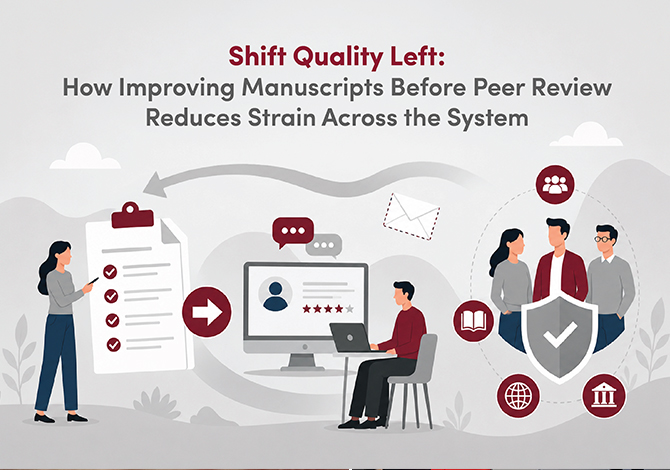
Shift Quality Left: How Improving Manuscripts Before Peer Review Reduces Strain Across the System
In our latest blog post, Product Director Laura Stemmle explains how moving manuscript quality checks to the very beginning of the submission stage can transform the publishing lifecycle. By addressing structural validation and language editing upstream, publishers can resolve compounding issues early and relieve the intense pressure that creates bottlenecks in the scholarly communication process.
Key Takeaways:
- Evaluating scope immediately upon submission with intelligent journal fit tools saves editor time and retains quality research within a publisher’s portfolio.
- Integrating AI-assisted language editing before peer review allows reviewers to focus entirely on scientific merit rather than correcting grammar.
- Adopting an XML-first, single-source publishing approach eliminates metadata loss and prevents costly handoff errors from submission to production.
Events & Community
STM US Annual Conference 2026
April 22–23 | The National Press Club, Washington, DC
HighWire participated in the STM US Annual Conference, where industry leaders gathered to address the central question: “Are We Future-Ready?”. Senior Account Director Meg Waites represented HighWire on-site, connecting with publishers to explore the ongoing industrial shift in scientific publishing and the future of research communication.
Takeaways:
- The industry is actively navigating a significant industrial shift, requiring adaptable and scalable publishing strategies
- AI and emerging technologies continue to profoundly impact the trajectory
of research communication. - In-person discussions emphasized the need to build future-ready infrastructures that support evolving publishing goals.
SSP 48th Annual Meeting
May 27–29, 2026 | Gaylord Pacific Resort & Convention Center, Chula Vista, CA, USA
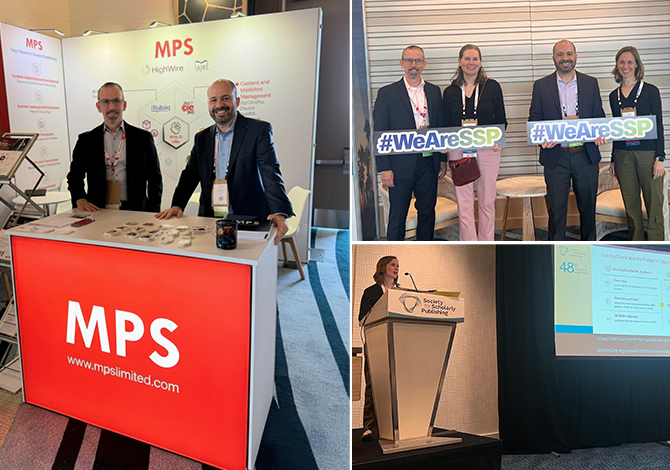
The HighWire team had a highly collaborative presence at Booth #100 during this year’s Society for Scholarly Publishing (SSP) Annual Meeting. David Goodman, Laura Stemmle, Christopher Abbott, and Meg Waites connected with publishing leaders to discuss AI-powered workflows and end-to-end content solutions designed to resolve persistent industry bottlenecks. Product Director Laura Stemmle also delivered a well-attended breakout session focused on optimizing the early stages of the submission lifecycle.
Session Highlights & Takeaways:
- Laura Stemmle’s session emphasized that catching manuscript structure and language issues upstream before peer review begins critically reduces the administrative and technical strain placed on reviewers and editors.
- Discussions at the booth centered on practical workflow modernization, specifically utilizing AI triage tools and single-source architecture to build more agile, responsive publishing systems.
- Highly interactive Q&A sessions and face-to-face booth discussions signaled a strong readiness across the scholarly community to actively implement technology solutions rather than just discussing workflow challenges.
4th PubTech Conference & STM APAC Conference 2026
June 15-16,2026| Beijing, China
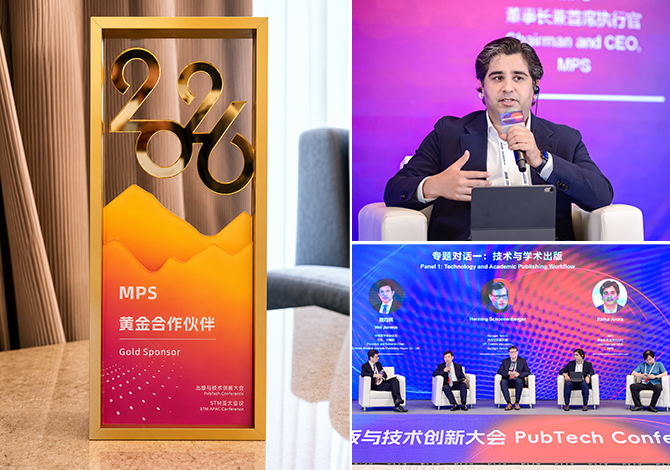
HighWire supported this year’s conference as a Gold Sponsor, contributing to vital conversations shaping the future of scholarly publishing across the APAC region. Chairman & CEO Rahul Arora joined a prominent panel to dive deep into technology applications and the evolution of academic publishing workflows.
Takeaways:
- Panel discussions focused heavily on transitioning toward smarter editorial infrastructures to address global workflow demands.
- The event highlighted practical approaches to AI integration, exploring how automated tools can be responsibly embedded into the publishing lifecycle.
- Two days of networking and collaboration with regional partners emphasized a shared commitment to building more connected and modern publishing ecosystems.
News & Partnerships
Enhanced Digital Platform Launch for The Middle East Journal
In April, HighWire partnered with the Middle East Institute (MEI) to launch a fully upgraded hosting platform for The Middle East Journal (MEJ). This migration transitioned the journal from a legacy system to a modern digital home, delivering an improved user experience and deeper integration capabilities tailored for global researchers and policymakers.
Platform Enhancements & Takeaways:
- Customization and Control: A redesigned site architecture provides MEI with complete control over its branding and content presentation to better serve its readership.
- Seamless Access Management: HighWire’s identity and access management system, Sigma, was directly integrated with MEI’s Salesforce CRM to ensure smooth and secure access for all subscribers.
- Advanced Analytics & Discovery: The upgraded platform features industrystandard, COUNTER-compliant usage statistics, full-text availability, and refined search functionality to accurately track engagement and surface relevant content.